I finally figure this puzzle out that has been bugging me for YEARS!
But before I do:
1. Will everyone yell at me like you do at GlossyWhite?
2. Who already knows the answer? For if you do I don't want to hear about it later.
3. Who doesn't care. That's OK, feel free to post. It just bumps the thread.
Why IBM Model M's Number Row Is Not Helvetica But Alphas Are

-
kps

- Location: Waterloo, Ontario, Canada
- Main keyboard: Kinesis contoured
- Main mouse: Kensington Slimblade trackball
- DT Pro Member: -
The normal consist of a metal or film font in the days before computer vector typefaces does not include all the characters that appear on a computer (or Wheelwriter) keyboard, so they had to roll their own.
-
ripster
- Location: Ugly American
- Main keyboard: As Long As It is Helvetica
- Main mouse: Mickey
- Favorite switch: Wanna Switch? Well, I Certainly Did!
- DT Pro Member: -
Because I have to take pics.
Lot of work doing Haha OR AHA! posts.
Lot of work doing Haha OR AHA! posts.
Last edited by ripster on 27 Mar 2012, 16:25, edited 1 time in total.
-
ripster
- Location: Ugly American
- Main keyboard: As Long As It is Helvetica
- Main mouse: Mickey
- Favorite switch: Wanna Switch? Well, I Certainly Did!
- DT Pro Member: -
kps wrote:The normal consist of a metal or film font in the days before computer vector typefaces does not include all the characters that appear on a computer (or Wheelwriter) keyboard, so they had to roll their own.
OOooh!
I LIKE this answer! But not quite. Dollar sign and the at sign (monkey tail - lol) have been around a LONG time.
Helvetica Neue
IBM Model M
- FLA_9551.jpg (928.67 KiB) Viewed 6634 times
-
itlnstln
- Location: San Antonio, TX
- Main keyboard: Noppoo Choc Mini
- Favorite switch: Cherry Brown
- DT Pro Member: -
Not sure what forum you're hanging out on, but here's my attempt (from GH):
Is this a clue? Some of the symbols, in Helvetica, would look terrible in dye sub... especially "$" and maybe "@."ripster wrote:(Dyesub is a bit of a fuzzy process)
-
ripster
- Location: Ugly American
- Main keyboard: As Long As It is Helvetica
- Main mouse: Mickey
- Favorite switch: Wanna Switch? Well, I Certainly Did!
- DT Pro Member: -
Nope.
And we have to stop meeting like this.
I'll take more pics of the Monkey Tail when I get a chance today. Busy AM.
- FLA_4520-2.jpg (396.88 KiB) Viewed 6624 times
I'll take more pics of the Monkey Tail when I get a chance today. Busy AM.
-
kps
- Location: Waterloo, Ontario, Canada
- Main keyboard: Kinesis contoured
- Main mouse: Kensington Slimblade trackball
- DT Pro Member: -
They were around, but not generally part of a normal font (a 'font' being a set of metal sorts of some typeface). The dollar sign is an exception, for American foundries, though I don't know whether one was originally cut for Helvetica. Printers would use 'handy sets' of special characters — at signs, percent signs, fractions, and so on — that didn't necessarily match any particular typeface exactly. (You can still buy them; at signs are particularly popular now that business cards typically display email addresses.)ripster wrote:Dollar sign and the at sign (monkey tail - lol) have been around a LONG time.
-
ripster
- Location: Ugly American
- Main keyboard: As Long As It is Helvetica
- Main mouse: Mickey
- Favorite switch: Wanna Switch? Well, I Certainly Did!
- DT Pro Member: -
Isn't America Great!
Ooh, nice @ here.
But anyhoo, any guesses why IBM didn't just stick with the Model F XT linethrough Dollar fonts? That is one I don't know. And back in the old days I would have thought at LEAST the @ was cut for Helvetica.Archibald Binny was an Edinburgh punchcutter who emigrated to Philadelphia in 1795. Here he met James Ronaldson, a businessman also from Edinburgh. The two Scots combined their business and technical skills to open Binny & Ronaldson, the first successful American typefoundry, in 1896. This company’s success marked the beginning of the end of America’s reliance on Europe for type. According to Updike, in 1797 the company cast the first ever dollar signs. They also produced the first American type specimen books, in 1809 and 1812.
Ooh, nice @ here.
-
webwit

- Wild Duck
- Location: The Netherlands
- Main keyboard: Model F62
- Favorite switch: IBM beam spring
- DT Pro Member: 0000
- Contact:
The Model F XT was before Sonoran Sans Serif, the others after.
-
webwit
- Wild Duck
- Location: The Netherlands
- Main keyboard: Model F62
- Favorite switch: IBM beam spring
- DT Pro Member: 0000
- Contact:
It was an elaborate effort to sell books about fonts to gullible people decades later.
-
ripster
- Location: Ugly American
- Main keyboard: As Long As It is Helvetica
- Main mouse: Mickey
- Favorite switch: Wanna Switch? Well, I Certainly Did!
- DT Pro Member: -
I think IBM knew that Model M's would be Hipster some day and wanted us to have something to talk about.
And run through this HTML stuff again....I just want to learn enough about fonts to impress female Art Majors.
Trebuchet. Definitely says Trebuchet.
And run through this HTML stuff again....I just want to learn enough about fonts to impress female Art Majors.
Code: Select all
.content {
	font-size: 11pt;
	line-height: 14pt;
	margin-bottom: 1em;
	font-family: "Lucida Grande", "Trebuchet MS", Verdana, Arial, Helvetica, sans-serif;
	overflow: hidden;
}-
webwit
- Wild Duck
- Location: The Netherlands
- Main keyboard: Model F62
- Favorite switch: IBM beam spring
- DT Pro Member: 0000
- Contact:
It uses the first font in the list your system supports.
-
itlnstln
- Location: San Antonio, TX
- Main keyboard: Noppoo Choc Mini
- Favorite switch: Cherry Brown
- DT Pro Member: -
Unless he doesn't have Lucida Grande. He uses Windows, so he's probably getting Trebuchet; I had to install Lucida Grande on my Windows install. Lucida Grande is a better font, IMO.webwit wrote:It uses the first font in the list your system supports.
-
webwit
- Wild Duck
- Location: The Netherlands
- Main keyboard: Model F62
- Favorite switch: IBM beam spring
- DT Pro Member: 0000
- Contact:
Like, the first font your system supports.
-
Charlie_Brown_MX

- Location: United Kingdom
- Main keyboard: Apple Extended Keyboard
- Main mouse: Microsoft IntelliMouse
- Favorite switch: ALPS: cream or salmon
- DT Pro Member: -
*Much* better. It’s optimised for use on the screen for one, and it doesn’t have the slightly eccentric character of Trebuchet. It’s just a shame Apple seem hellbent on abandoning it as their UI font of choice…itlnstln wrote:Lucida Grande is a better font, IMO.
-
ripster
- Location: Ugly American
- Main keyboard: As Long As It is Helvetica
- Main mouse: Mickey
- Favorite switch: Wanna Switch? Well, I Certainly Did!
- DT Pro Member: -
I have to say Deskthority.net looks grand on both my Windows PC in Trebuchet and my iPad in Trebuchet and am always willing to learn despite being called a "insensitive clod". In fact I thought "Insensitive Clog" was what they danced at the Dutch Tulip Festivals.
But this is not the quest at hand.
Now THIS was VERY close.
But this is not the quest at hand.
Now THIS was VERY close.
=kps IBM used 'open' dollar signs on everything from the 029 through the Displaywriter. The shapes are not identical to the M/F keyboards, though.http://www.columbia.edu/cu/computinghistory/029.html
- man-at-old-computer.jpg (185.6 KiB) Viewed 6523 times
The IBM 29 Card Punch (also called the 029 or Type 029 Key Punch or Keypunch), introduced about 1964 to coincide with the introduction of the IBM 360. Available in nine models with various combinations of keyboard (12-key numeric or 64-key alphanumeric), zero insertion, printing, and interpreting, and also as the IBM 59 Card Verifier (for verifying that cards punched on the 29 were correct).
Last edited by ripster on 28 Mar 2012, 03:04, edited 1 time in total.
-
daedalus

- Buckler Of Springs
- Location: Ireland
- Main keyboard: Model M SSK (home) HHKB Pro 2 (work)
- Main mouse: CST Lasertrack, Logitech MX Master
- Favorite switch: Buckling Spring, Beam Spring
- DT Pro Member: 0087
Ooh, 3277 terminals ^^^
The size of of the numbers has definitely changed - when I compare the number row from my 122-key Model F to the number row from my SSK, the latter have consistently bigger print than the former.
The size of of the numbers has definitely changed - when I compare the number row from my 122-key Model F to the number row from my SSK, the latter have consistently bigger print than the former.
-
Findecanor
- Location: Stockholm, Sweden
- DT Pro Member: 0011
I think that the big deal is that you want O and 0 to look different.
-
webwit
- Wild Duck
- Location: The Netherlands
- Main keyboard: Model F62
- Favorite switch: IBM beam spring
- DT Pro Member: 0000
- Contact:
Vintage IBM promotional photo and no IBM babes? I object.


-
ripster
- Location: Ugly American
- Main keyboard: As Long As It is Helvetica
- Main mouse: Mickey
- Favorite switch: Wanna Switch? Well, I Certainly Did!
- DT Pro Member: -
Edited my previous post. iOS does not support Lucida Grande so indeed I am looking at Trebuchet YET again. I thought the g looked odd.
I will now take pics of the non-Helvetica "at" symbol.
Germans call it the Affenschwanz - the Monkey's Tail.
I'd post a screenshot but I'm on my iPad.
I will now take pics of the non-Helvetica "at" symbol.
Germans call it the Affenschwanz - the Monkey's Tail.
I'd post a screenshot but I'm on my iPad.
-
itlnstln
- Location: San Antonio, TX
- Main keyboard: Noppoo Choc Mini
- Favorite switch: Cherry Brown
- DT Pro Member: -
Damn, look at those wrist rests.ripster wrote:I have to say Deskthority.net looks grand on both my Windows PC in Trebuchet and my iPad in Trebuchet and am always willing to learn despite being called a "insensitive clod". In fact I thought "Insensitive Clog" was what they danced at the Dutch Tulip Festivals.
But this is not the quest at hand.
Now THIS was VERY close.http://www.columbia.edu/cu/computinghistory/029.html=kps IBM used 'open' dollar signs on everything from the 029 through the Displaywriter. The shapes are not identical to the M/F keyboards, though.The IBM 29 Card Punch (also called the 029 or Type 029 Key Punch or Keypunch), introduced about 1964 to coincide with the introduction of the IBM 360. Available in nine models with various combinations of keyboard (12-key numeric or 64-key alphanumeric), zero insertion, printing, and interpreting, and also as the IBM 59 Card Verifier (for verifying that cards punched on the 29 were correct).
-
Lustique

- Location: Germany
- Main keyboard: G81-3424LPNDE-0/00
- Main mouse: Kensington Orbit Scroll Ring Trackball
- Favorite switch: Buckling Cherry MY bruewck
- DT Pro Member: -
I propose substituting Lucida Grande/Lucida Sans Unicode with Frutiger (or something along the line). Lucida doesn't even come with a real oblique type, let alone italics.
-
ripster
- Location: Ugly American
- Main keyboard: As Long As It is Helvetica
- Main mouse: Mickey
- Favorite switch: Wanna Switch? Well, I Certainly Did!
- DT Pro Member: -
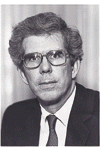
So ANYHOO nobody can guess the origins of the Number Row Font? The Trick is to walk in the shoes of a IBM engineer working for this guy.
Note to iMav. Deskthority is more iPad friendly than Geekhack.
Sent From Brother Ripster's iPad
Note to iMav. Deskthority is more iPad friendly than Geekhack.
Sent From Brother Ripster's iPad
-
kps
- Location: Waterloo, Ontario, Canada
- Main keyboard: Kinesis contoured
- Main mouse: Kensington Slimblade trackball
- DT Pro Member: -
That's easy! You copy the new Selectric III keyboard.ripster wrote:So ANYHOO nobody can guess the origins of the Number Row Font? The Trick is to walk in the shoes of a IBM engineer working for this guy.
-
ripster
- Location: Ugly American
- Main keyboard: As Long As It is Helvetica
- Main mouse: Mickey
- Favorite switch: Wanna Switch? Well, I Certainly Did!
- DT Pro Member: -
kps wrote:That's easy! You copy the new Selectric III keyboard.ripster wrote:So ANYHOO nobody can guess the origins of the Number Row Font? The Trick is to walk in the shoes of a IBM engineer working for this guy.
AND WE HAVE A WINNAH!!!!
- D20_4530.jpg (630.27 KiB) Viewed 6367 times
- D20_4531.jpg (698.88 KiB) Viewed 6367 times
Kps - you want a genuine Keyboard Company Beer Coaster? PM me your address and I can send you one with the oblig lego.
- FLA_4482-2-Edit.jpg (832.57 KiB) Viewed 6367 times